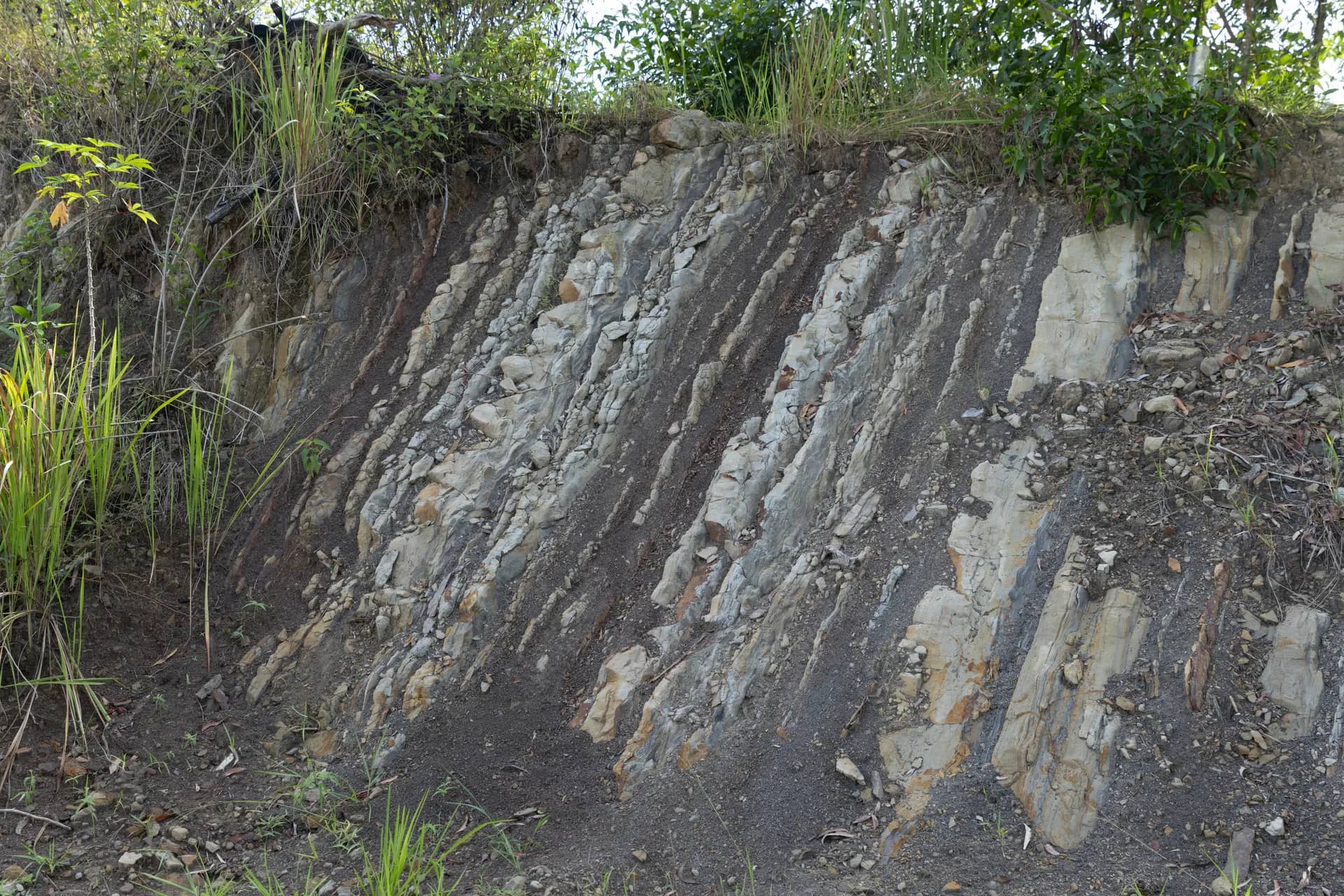
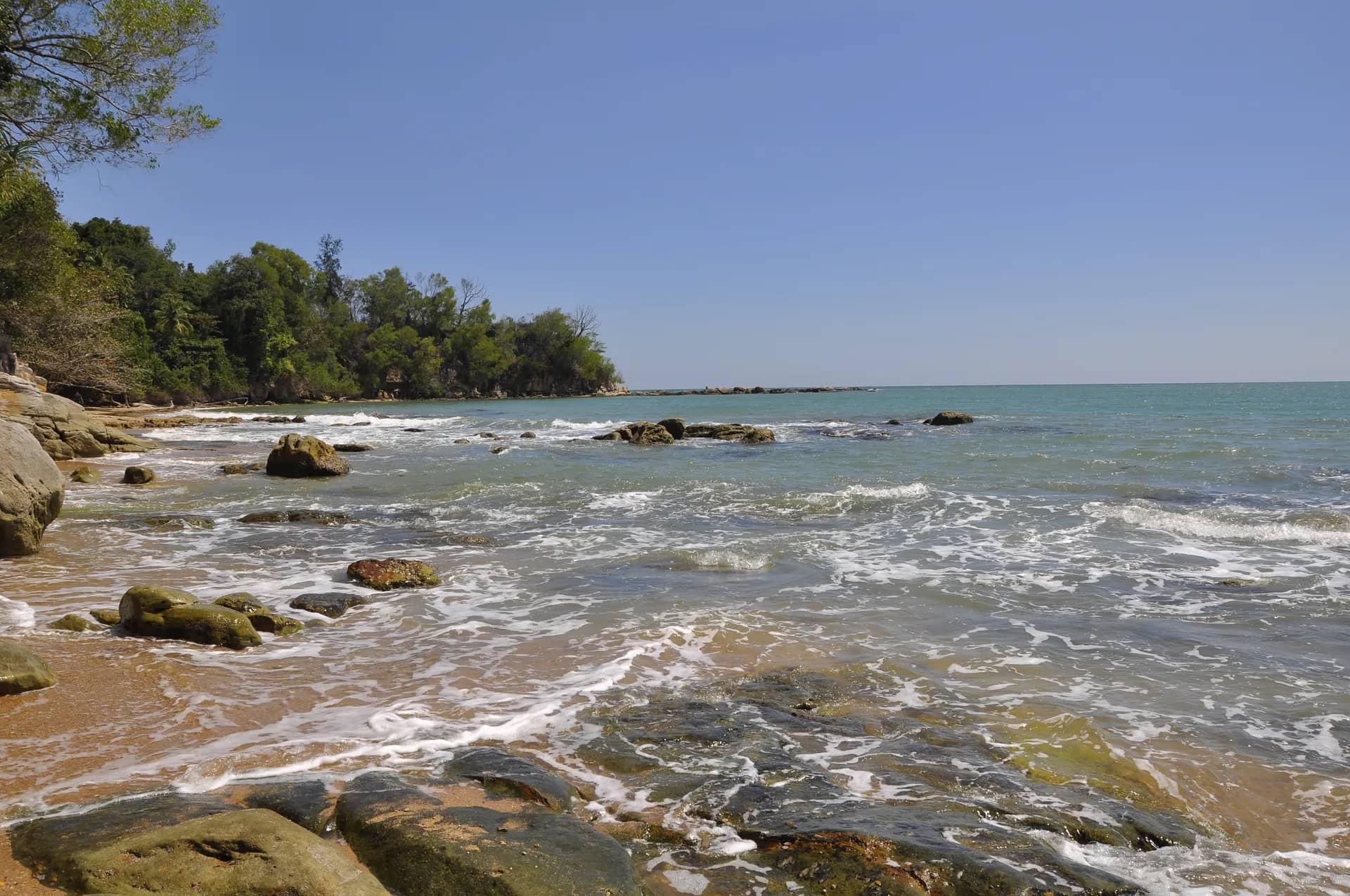
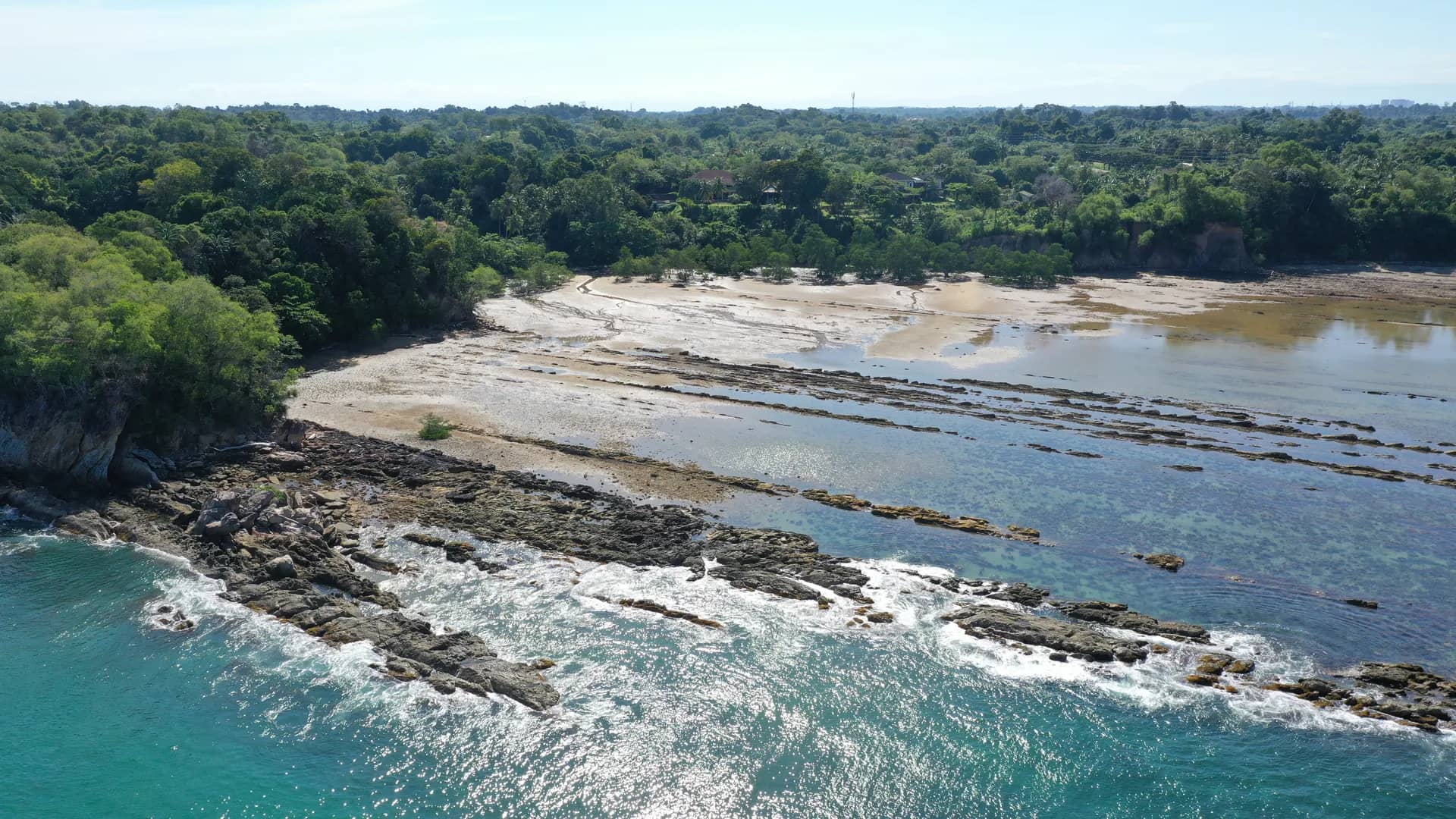
At this geosite you can observe deep-marine sedimentary deposits formed 33-23 million years ago at depths exceeding 2,000 metres. They are represented by a succession of red to dark grey mudstone layers overlain by interbedded siltstone and medium-thickness coarse sandstone.
Geologically, the outcrop is one of the best examples of the Temburong Formation, showing the development of several deep-sea fan lobes. The Bouma sequence is clearly visible here, characterising deposition by dense, sediment-laden turbidity currents. Each flow phase was deposited gradually as the current weakened, producing upward-fining sediment profiles within each layer.
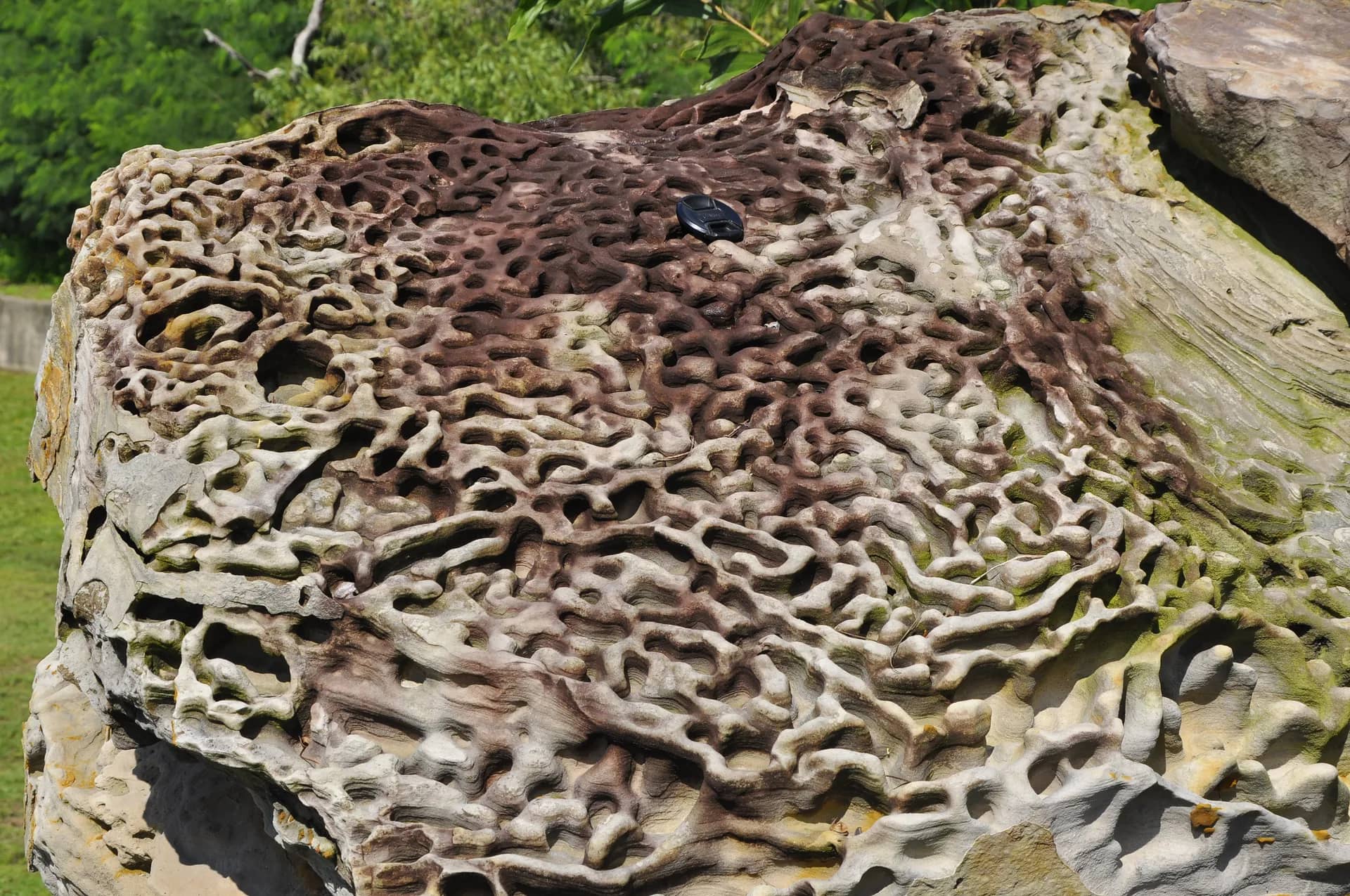
This geosite also displays numerous trace fossils, evidence of the activity of organisms that lived on the deep-sea floor about 30 million years ago. The diversity and excellent preservation of these trace fossils, together with the complete deep-marine turbidite succession, give the site outstanding scientific heritage value. The traces can be seen on the surfaces and within the layers of sandstone, showing various forms (winding, straight and honeycomb-like) that reveal behaviours such as feeding and burrow construction.
Trace fossils recorded at this site include Megagrapton isp., Ophiomorpha isp., Paleodictyion isp., Gyrophillites isp., Spiroraphe isp., Zoophycus isp., Helminotraphe isp., Scolicia isp. and Cosmoraphe isp.