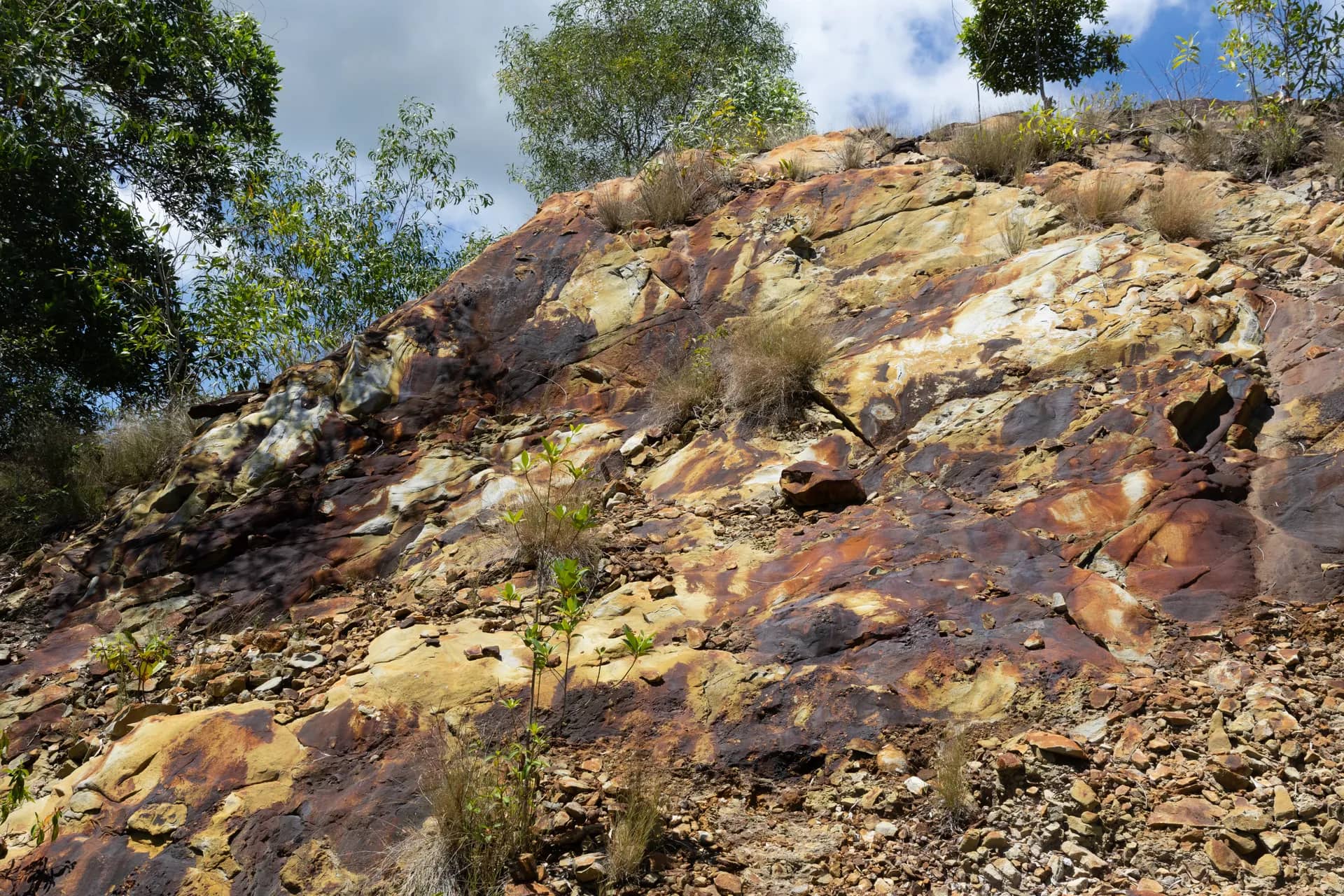
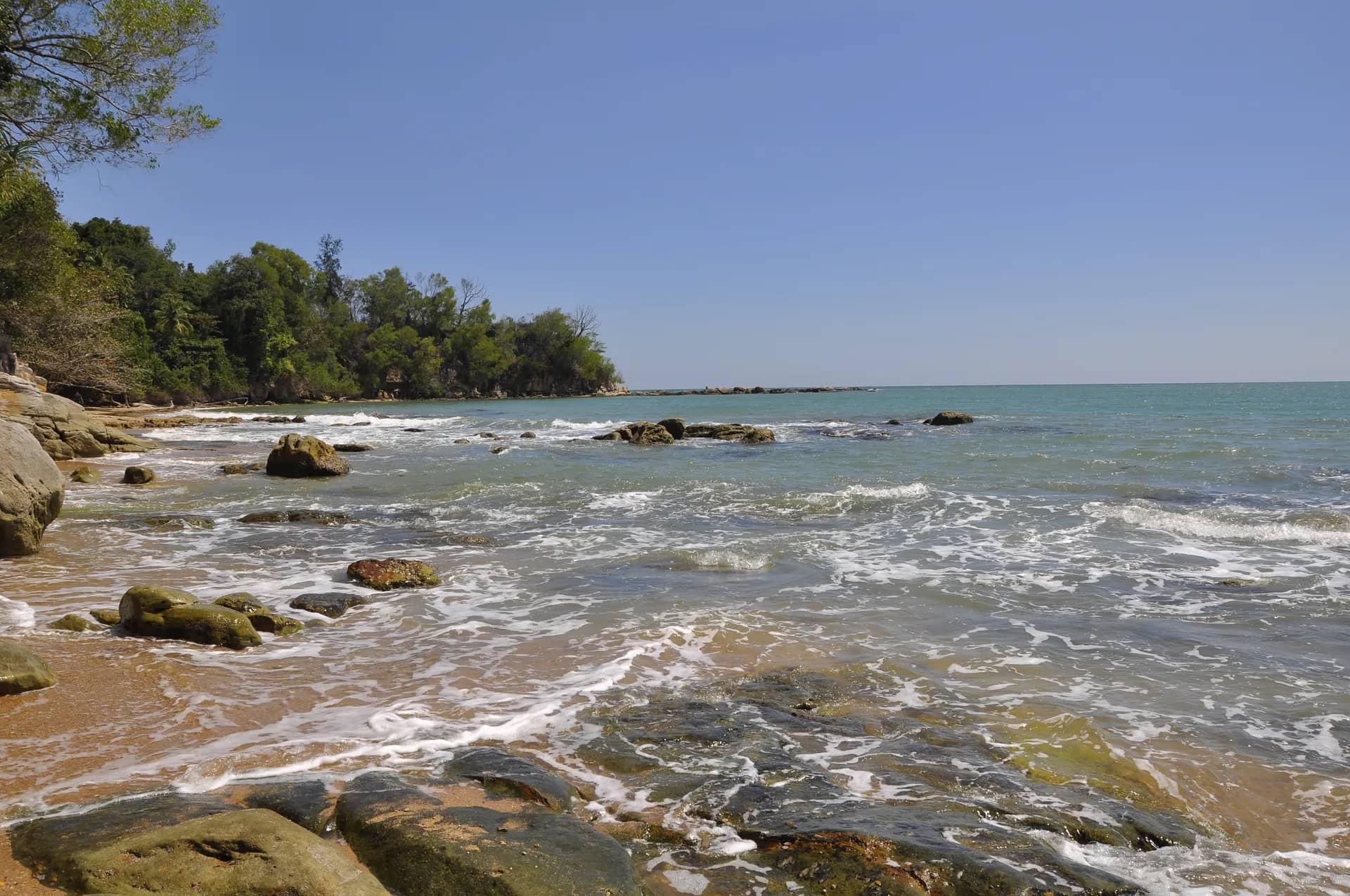
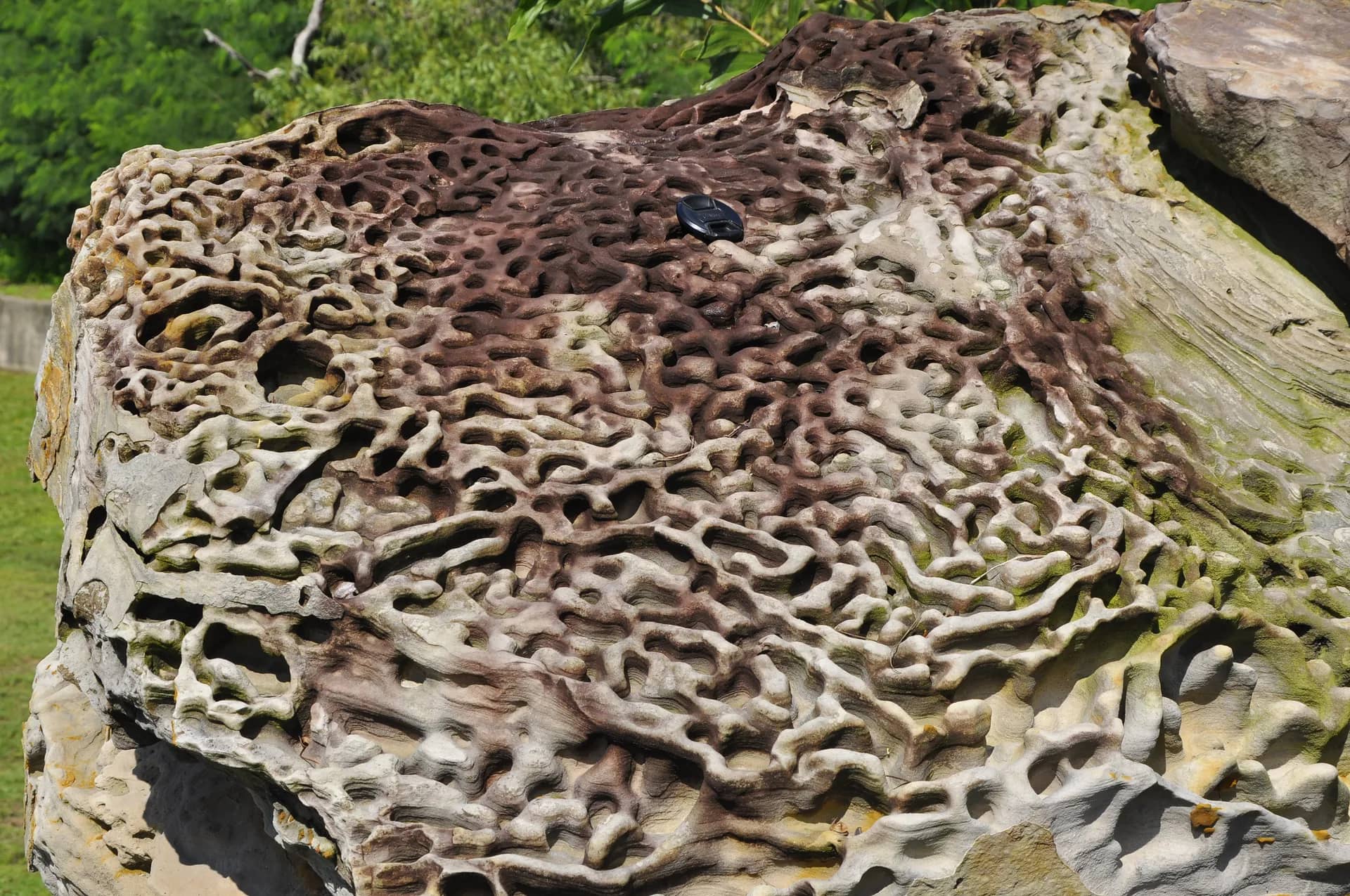
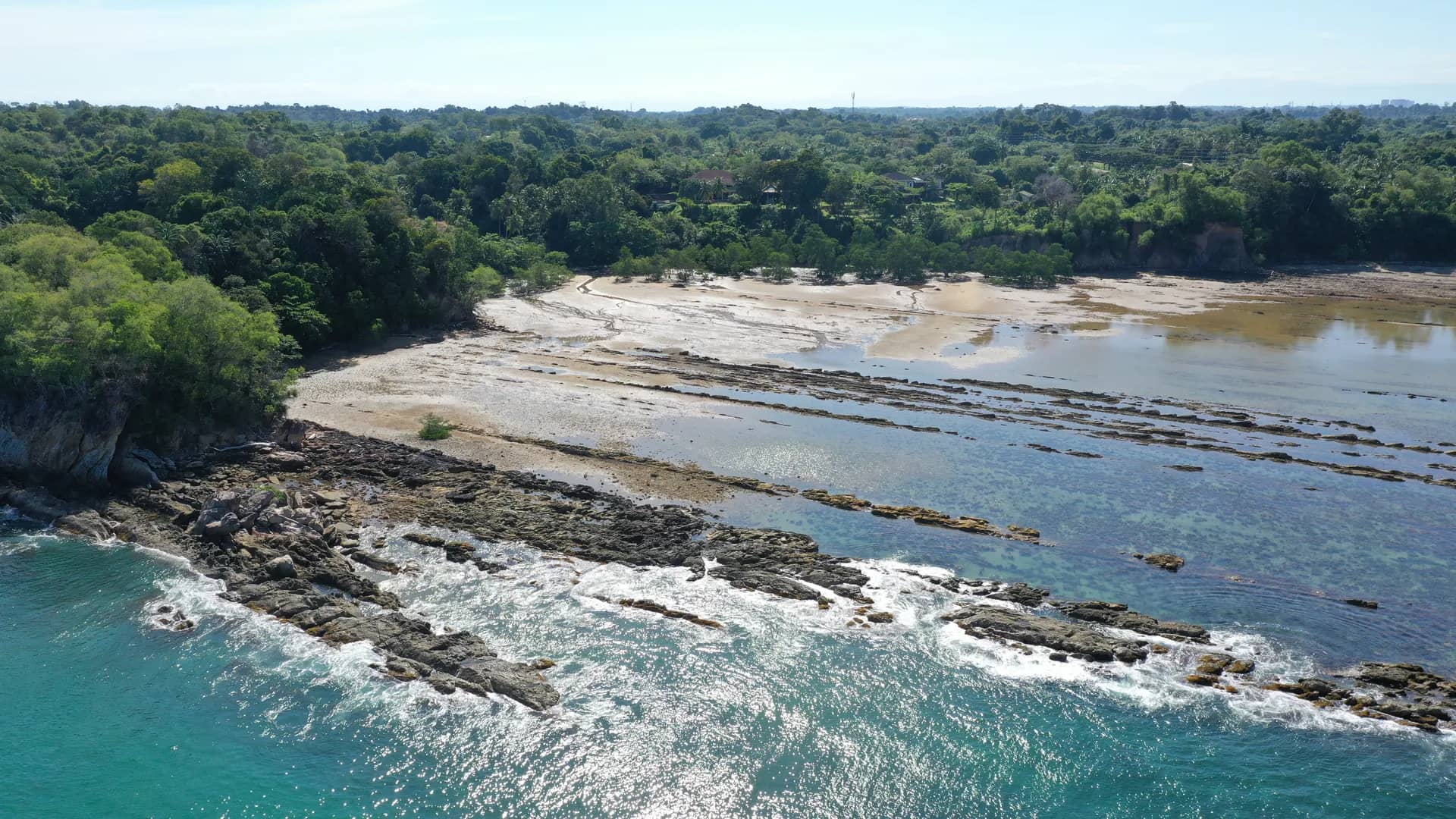
At this geoside, you can observe an exposed oil-bearing reservoir rock that still shows traces of hydrocarbons and even a faint smell of oil seeping out. This is the only locality where visitors can see and touch an oil reservoir rock that today normally lies several thousand feet beneath the seabed around Labuan.
The site forms part of the Belait Formation dated 23-5 million years old. Its uniqueness lies in the oil-saturated sandstone layers that allow oil to seep to the surface through pores between the sand grains. Over long periods these seepages have left brown to yellowish stains on the rock surface. Such a phenomenon is rare in Malaysia because most oil reservoirs occur thousands of feet below the offshore seabed.
There are also coal layers about 1-2 metres thick at three nearby locations, occurring between fine-grained siltstone and mudstone beds. These coal seams indicate deposition in calmer environments such as swamps or floodplains.
Conglomerate beds and well-preserved geological structures such as asymmetric ripple marks and cross-bedding are also exposed. These features are clues to the depositional environment of the rocks at this site, interpreted as having formed in ancient terrestrial and shallow-marine settings.