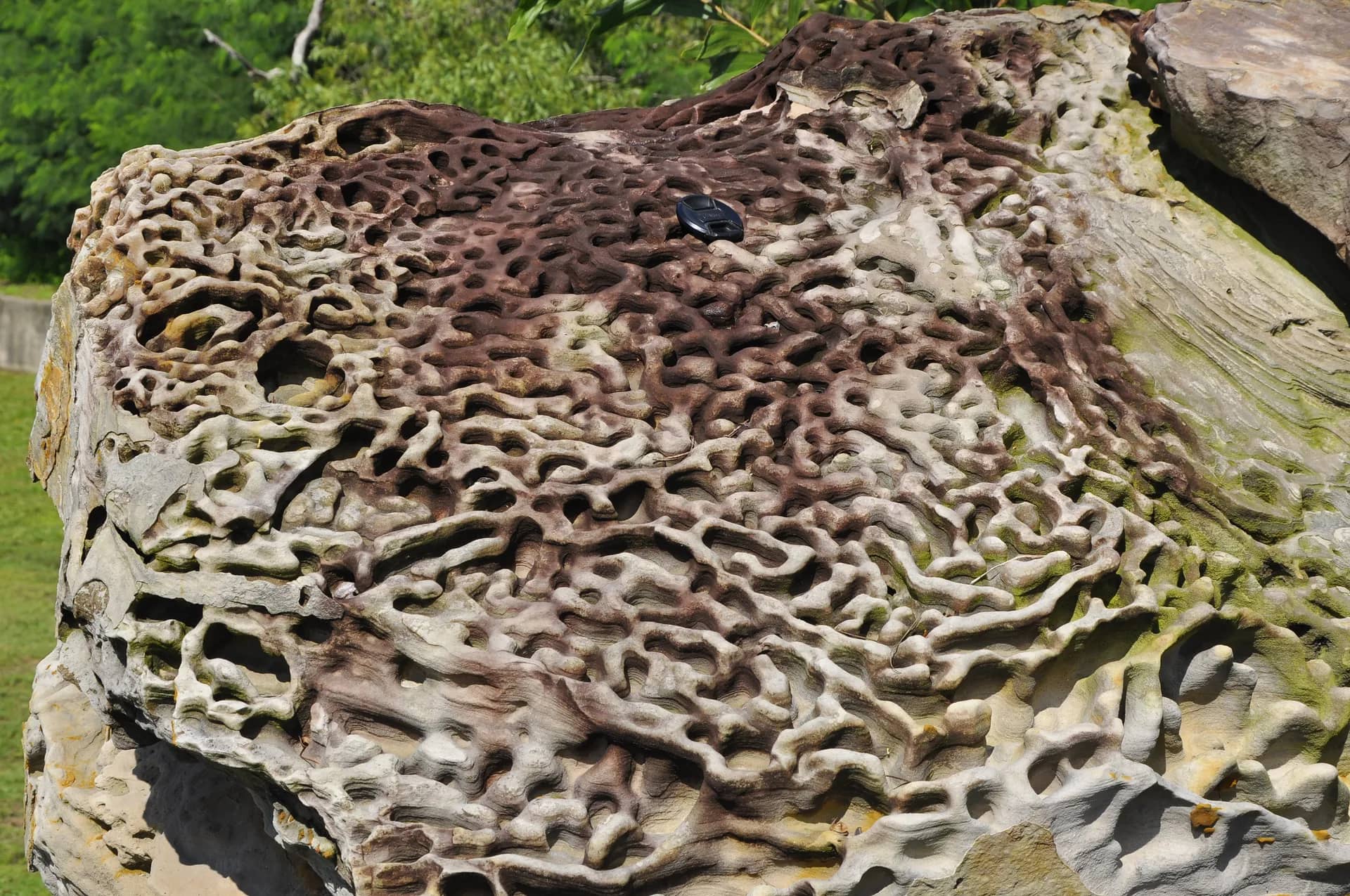
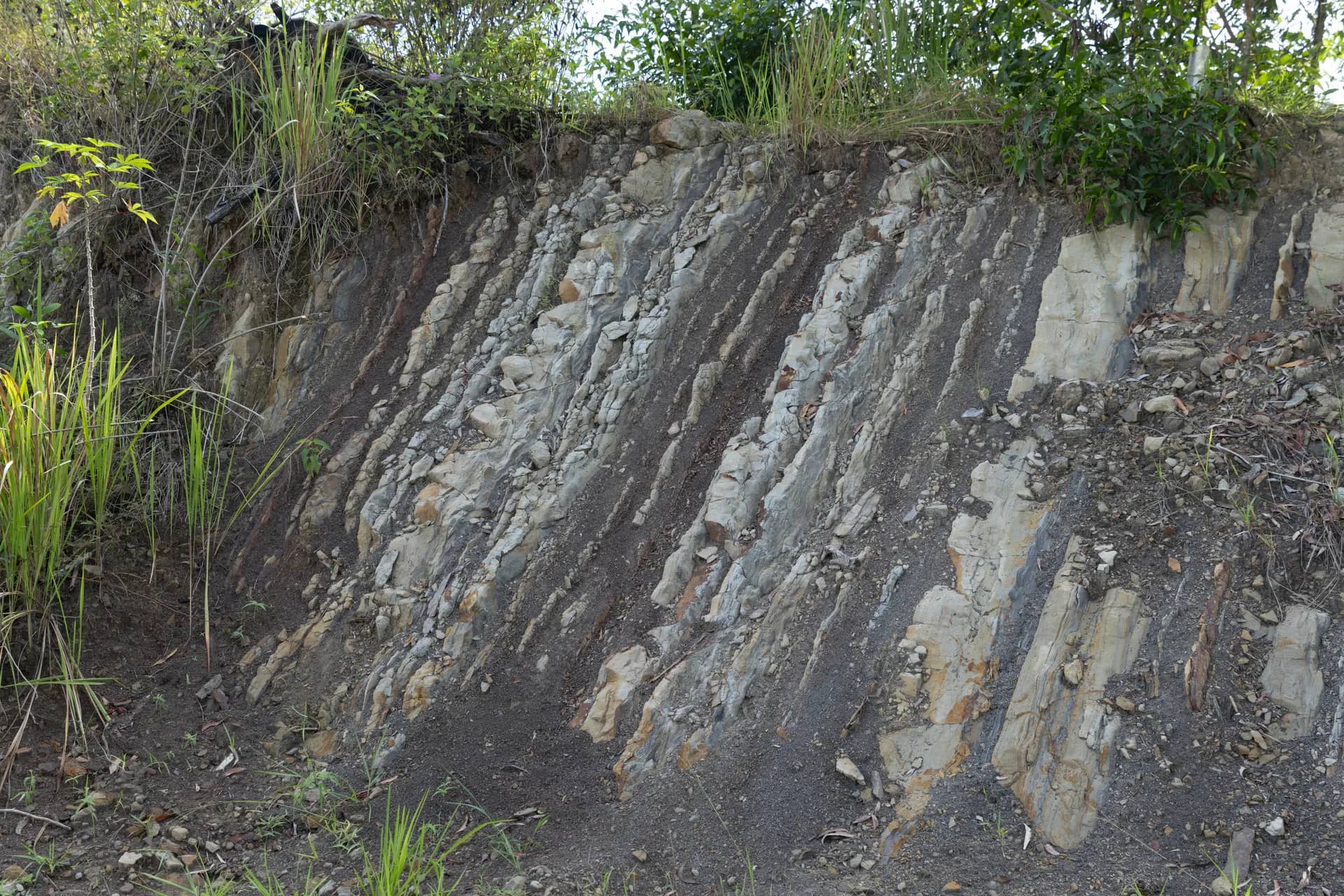
The rocks at this geosite are interpreted as braided river deposits that formed around 15 million years ago and are part of the lower sequence of the Belait Formation. The fresh and well-preserved outcrops display thick, nearly horizontal sandstone layers with large-scale cross-bedding clearly exposed along the coastline. These cross-beds are an important indicator for interpreting the depositional environment and the surface conditions of Labuan 15-5 million years ago.
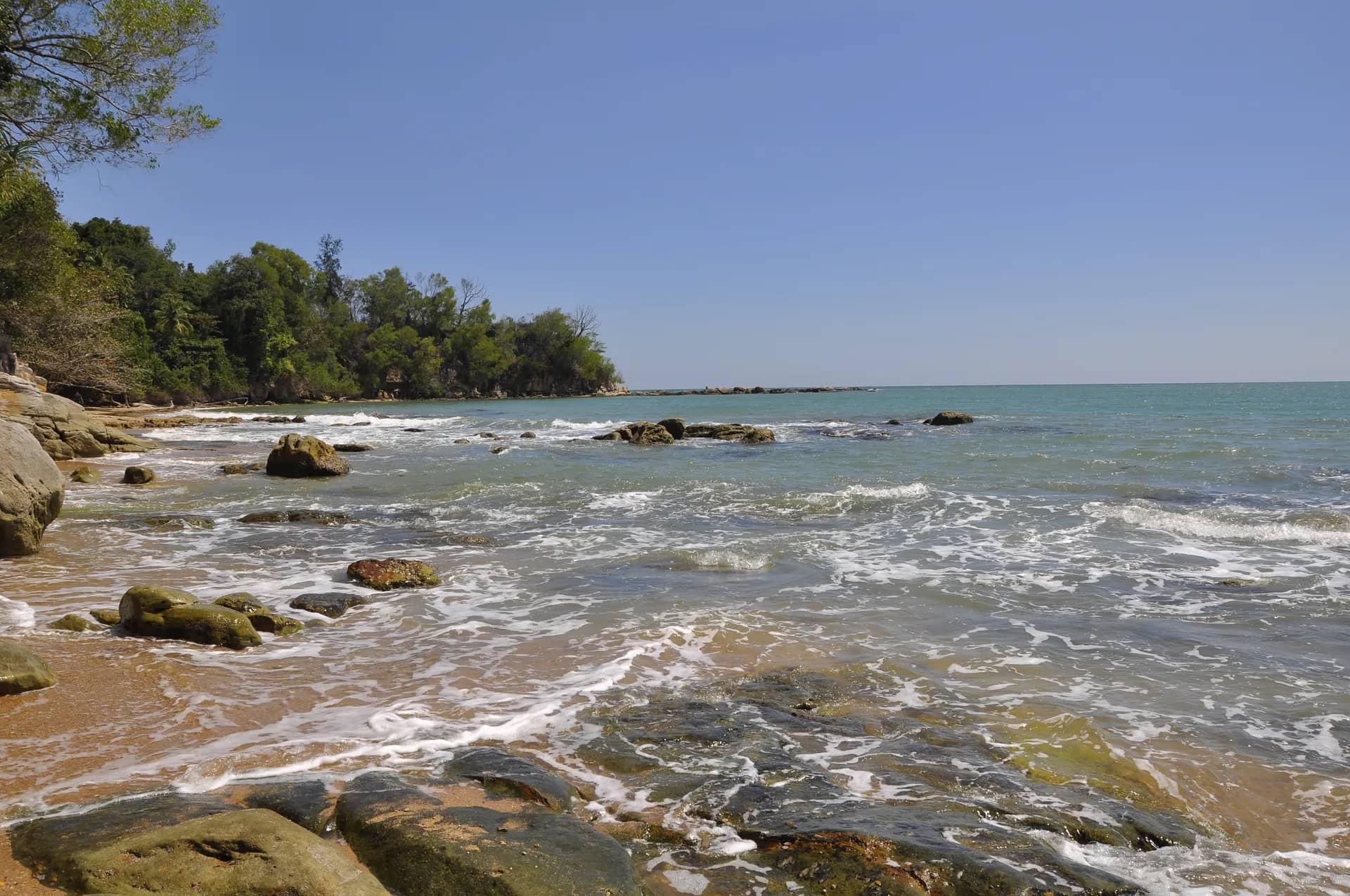
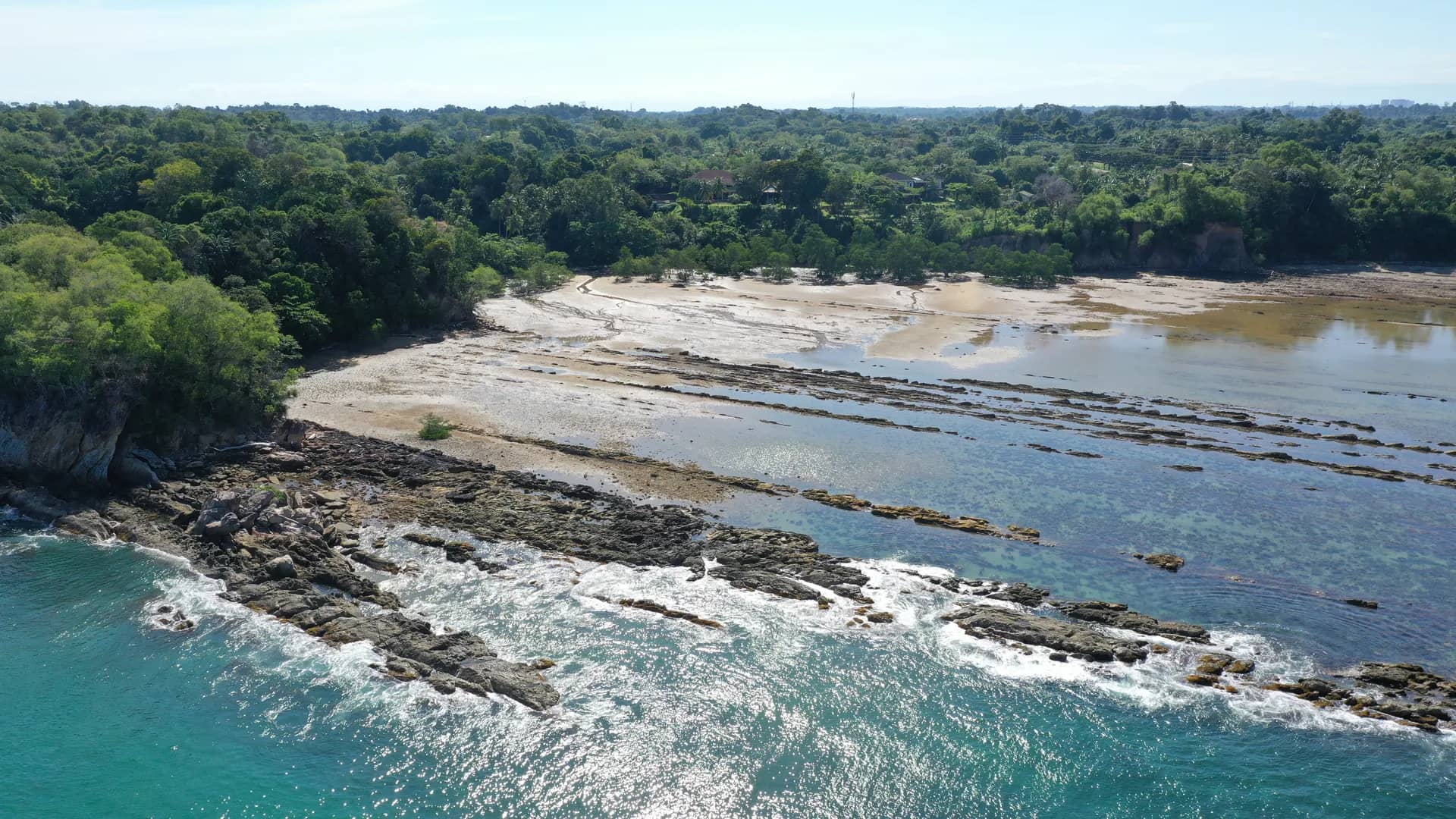
The coastline here is both unique and scenic, with a diverse natural landscape comprising alternating sandy and rocky beaches. In several areas, marine erosion has produced sea caves and sea arches. Various forms of coal can also be observed, including clasts, lenses, medium-thick layers and thin laminations, making this area one of the best examples of an ancient estuary in Malaysia with textbook-quality sedimentary structures.
This geosite also holds historical value as the location of “Raffles Anchorage,” the former site where steamships refuelled with coal during the colonial mining era. Its stunning views and high-quality sedimentary formations make this geosite an ideal spot for recreation, sunrise watching and geological photography.