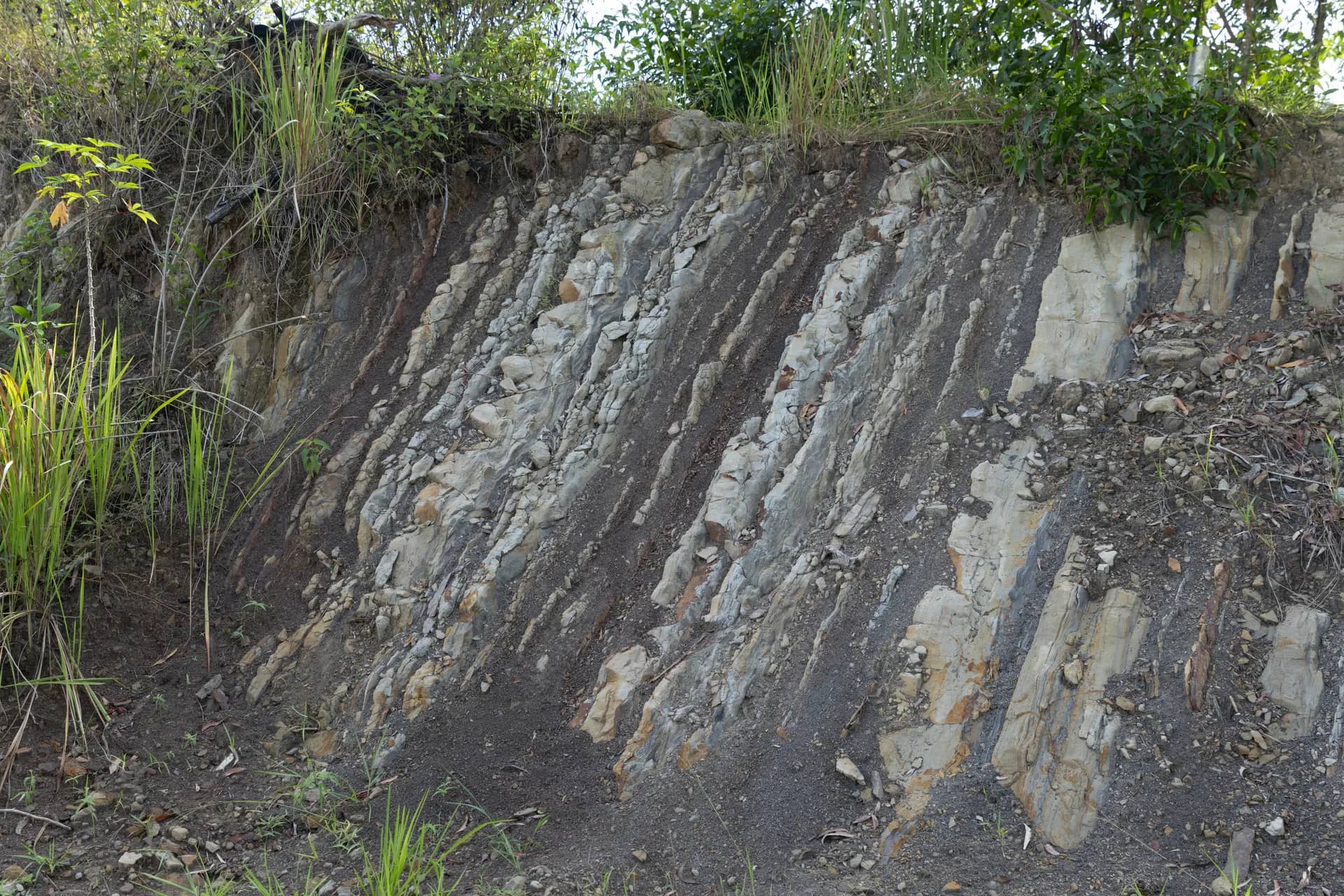
About 15 million years ago, this area lay beneath a shallow sea where sand was deposited layer upon layer. Waves and tides produced a variety of sedimentary structures such as cross-bedding, ripple marks, channels and flaser bedding. Marine life was abundant at the time, leaving both body fossils and trace fossils in the seabed.
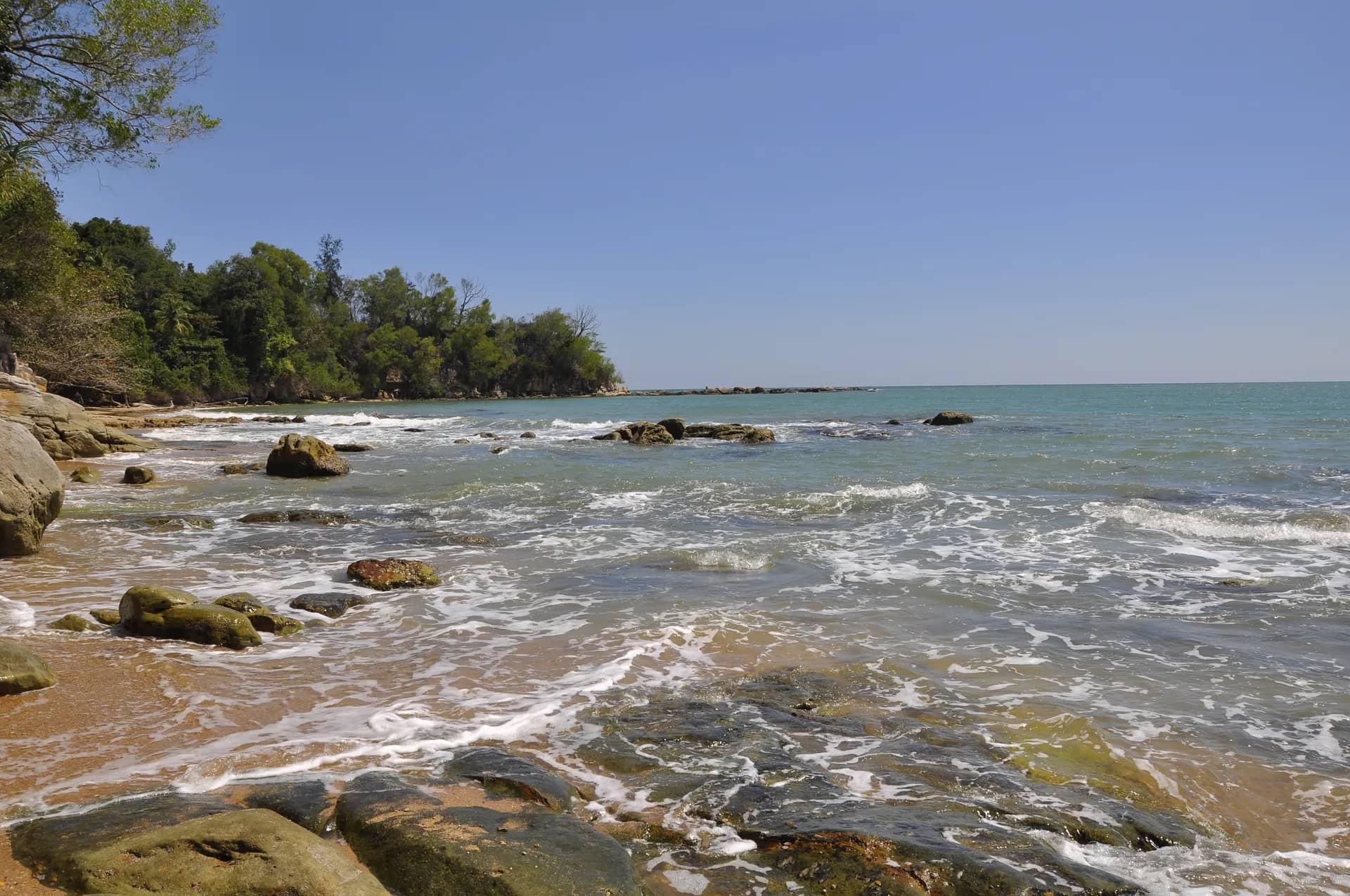
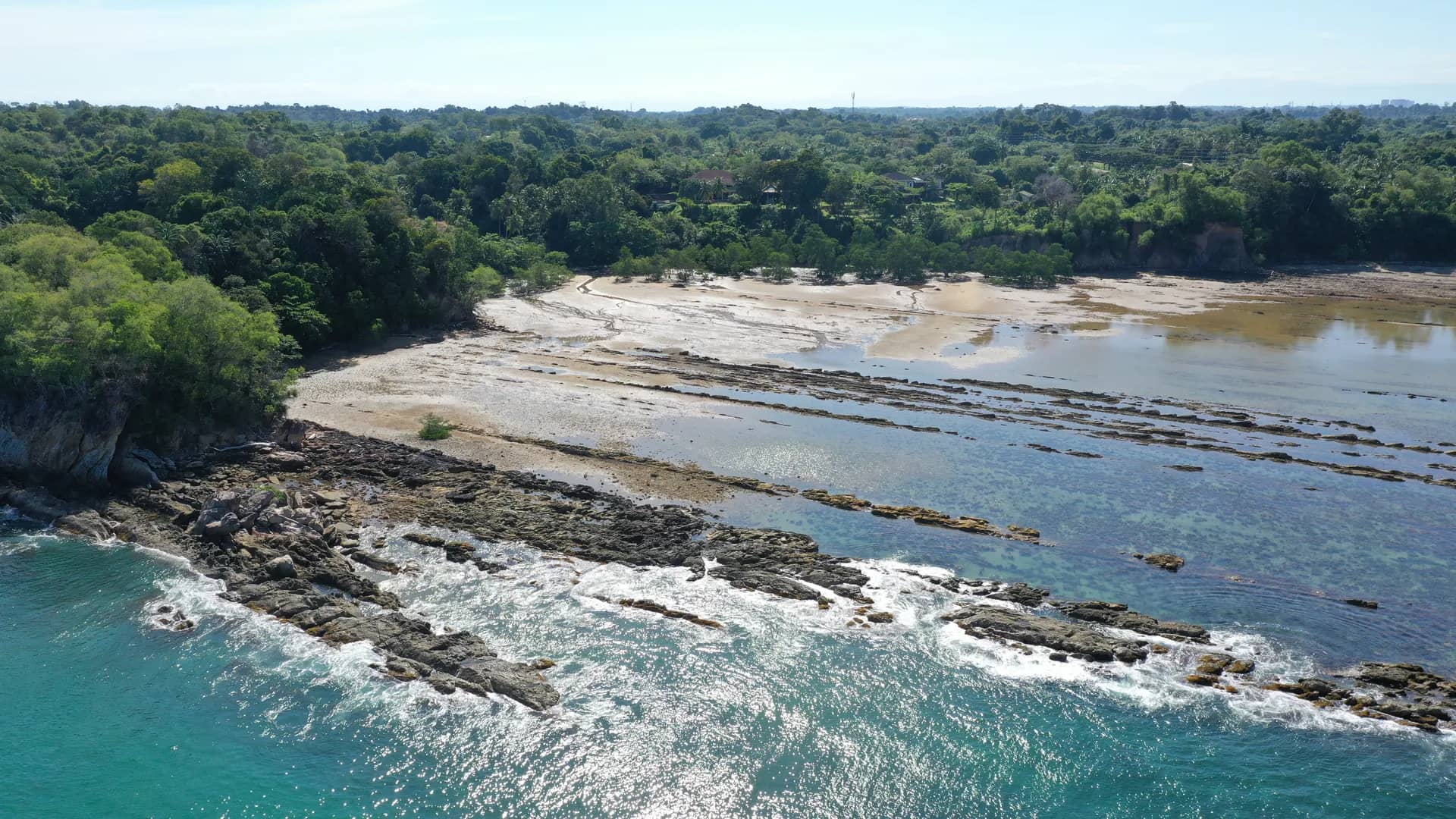
Today, visitors can see a rocky coastal cliffscape that preserves evidence of all these ancient processes. Sea-water erosion has sculpted striking features such as tafoni, wide wave-cut platforms, steep cliffs and headlands. Thick rock layers here reveal infilled tidal channels, and the site is especially rich in trace fossils from shallow-marine organisms, including vertical burrows such as Ophiomorpha isp. and Teichichnus isp. show the former dwellings of these creatures.
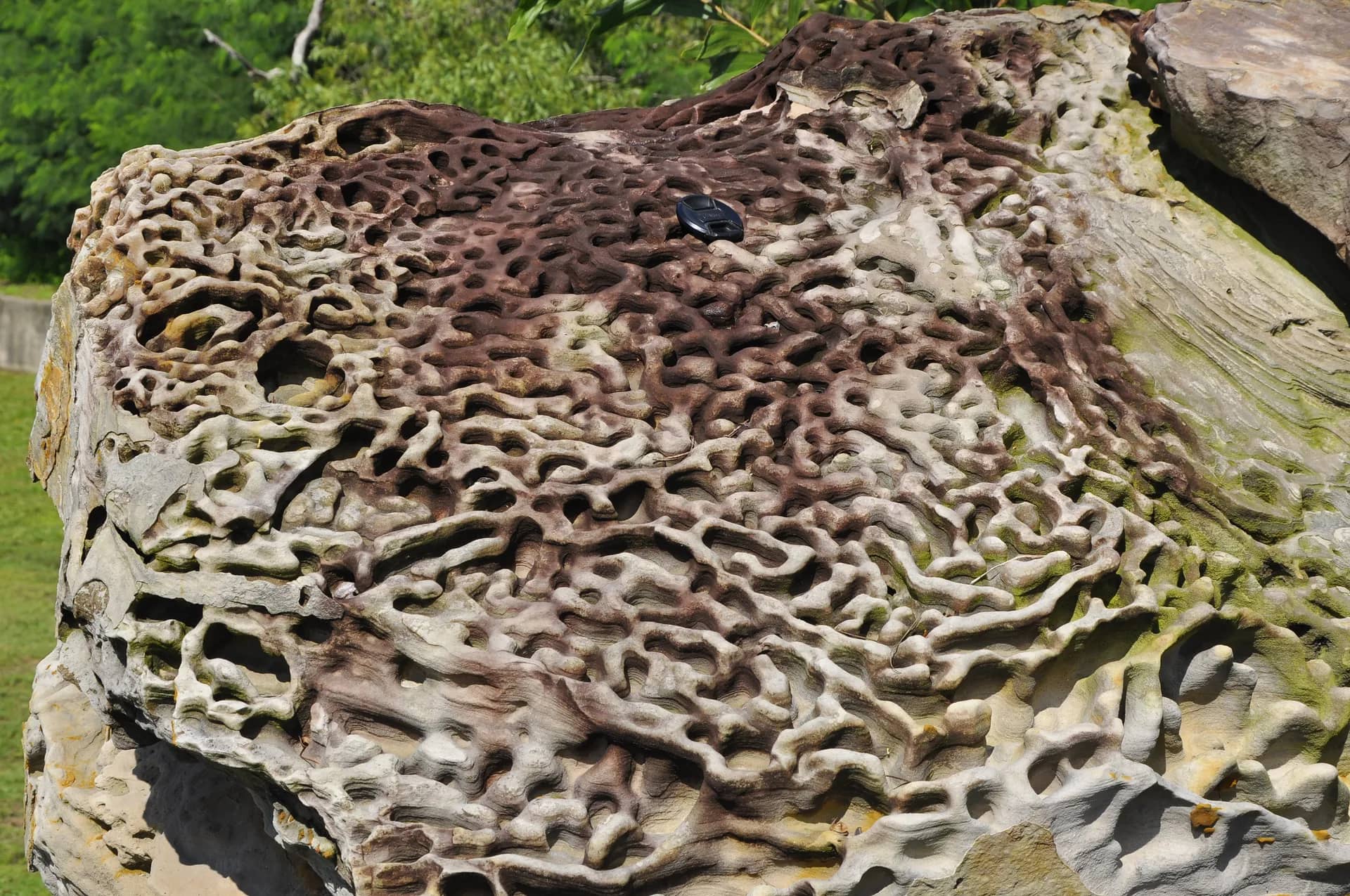
The site’s most distinctive feature is its tafoni, rarely seen elsewhere in Malaysia. These cavities are shaped like stream channels and resemble the folds of a human brain, unlike typical tafoni. Sedimentary structures such as trough cross-bedding and current ripple marks are also clearly displayed. Some rock surfaces appear bright orange due to lichens or fungi that contribute nutrients for photosynthesis.
This scenic headland not only safeguards high-value geological heritage but also offers great potential as a visitor attraction where people can relax while learning about Earth’s history.